
Blog
Potent Cannabis Strains: What the Lab Data Shows


The most potent cannabis strains are the Cookies and Kush family crosses: GMO Cookies, Blue Cheese, LA Kush Cake, Girl Scout Cookies and Wedding Cake, which typically test between roughly 20% and 28% THC. But a strain name doesn’t guarantee a number. Potency varies by grower, batch and lab, so the best way to buy a strong strain is to pick a proven genetic family, read the batch’s lab result, and match the strength to your tolerance. Our staff help customers do exactly that, with personalized product recommendations and educational support.
TL;DR
- Across tens of thousands of public state lab tests, the highest median THC readings go to GMO Cookies (26.74%), Blue Cheese (25.93%) and LA Kush Cake (25.39%).
- Peak numbers in “strongest strain” lists are best-case results. Typical medians are lower: Wedding Cake sits at 21.9% across 2,703 samples.
- In a Colorado study, observed THC in flower averaged 20.8% against a 22.5% labeled average, so use the label as a guide and the batch’s lab report as the detail.
- Higher THC raises the odds of a bad reaction. Start with one inhalation or a low edible dose and wait before taking more.
Table of Contents
- What “potent” means on a cannabis label
- The strongest strains, by what labs actually report
- Potency tiers and what they feel like
- How to check a strain’s real potency
- Choosing a strong strain for you
- Strong products beyond flower
- Using high-potency cannabis safely
- Where to find potent strains in Michigan
- FAQ
- Sources
What “potent” means on a cannabis label
Potency is the share of a product’s weight that is THC, the compound mainly responsible for the high. A flower labeled 25% total THC is a quarter THC by weight. Most retail flower falls somewhere in the high teens to high twenties. Concentrates, by contrast, run far higher: in the Colorado study above, concentrates averaged about 70% THC.
Two points matter before you compare strains:
- Total THC is the number that counts. In California, for example, retail labels for flower must show total THC as a percentage, while edibles list milligrams per serving and per package.
- A strain name is a family, not a recipe. One analysis of 63,692 flower samples from eight states cautions that the same strain name can cover different growers and versions. Two jars of “Wedding Cake” can test several points apart.
The strongest strains, by what labs actually report
Several “top 10” lists online quote a single best result for each strain. Lab-test medians tell you what you are likely to get. Here is how the most-named strains line up across the sources we reviewed.
| Strain | Reported THC | Type | What the figure is |
|---|---|---|---|
| GMO Cookies | 26.74% median | Hybrid | Median of public state lab tests |
| Blue Cheese | 25.93% median | Hybrid | Median of public state lab tests |
| LA Kush Cake | 25.39% median | Hybrid | Median; highest share of tests reaching 20% total THC among strains with at least 30 tests |
| Memory Loss | 26 to 31% | Sativa-leaning | Typical range in a strain guide |
| Girl Scout Cookies | 19 to 28% | Hybrid | Typical range |
| Wedding Cake | 22 to 25% | Hybrid | Typical range; 21.9% median in another dataset |
| Amnesia Haze | 20 to 25% | Sativa-leaning | Typical range |
| Bruce Banner | about 25% | Hybrid | Typical figure in a strain guide |
| Blue Dream | 17 to 24% | Sativa-dominant hybrid | Typical range |
| Gorilla Glue #4 | 19.4% median | Hybrid | Median across 528 samples |
Read the table as a map of families rather than a ranking. GMO Cookies is a good example: the lab-test median is 26.74%, yet one strain guide lists it at up to 24%. Different datasets, different samples, different answers. What stays constant is that the Cookies, Kush and Cheese lines cluster at the top.
Why a ranking can mislead
Thin data makes medians shaky: a strain with a handful of tests can look stronger or weaker than it really is. The Official Cannabis report only ranks strains with at least 30 tests for that reason. And the lab matters too. A Washington State analysis found that median THC for the same type of flower ranged from 17.7% to 23.2% depending on the lab, which the authors tied to differences in testing methods.
Potency tiers and what they feel like
As a rule of thumb for flower:
- Under 18%: approachable. A good starting point if you are new or returning after a break.
- 18 to 24%: the mainstream strong range. Most Blue Dream, Amnesia Haze and Wedding Cake batches land here.
- 25% and above: the top end. Expect GMO Cookies, Blue Cheese, LA Kush Cake and the best batches of Kush crosses.
These are our groupings for orientation, not an official scale. Percentage is only part of the story. Minnesota’s safer-use guide says that effects depend on the individual, the product’s potency and the route of use. Terpenes, the aromatic compounds in the flower, shape flavor and are often linked to how a strain feels. Blue Dream, for instance, is described as myrcene-led with pinene and caryophyllene, and an uplifted, creative head with a relaxed body. Girl Scout Cookies is described as caryophyllene-led, with a euphoric head and a relaxed body.
Indica, sativa or hybrid?
Breeders label strains by lineage, and many of the strongest are hybrids. Girl Scout Cookies, for example, is a 60% indica, 40% sativa cross of OG Kush and Durban Poison. If you want something bright for daytime, our sativa for energy page is a good place to start. If you want a classic heavy-hitting Kush profile, look at options such as Cali Kush, Pure Kush or Triangle Kush.
How to check a strain’s real potency
The label tells you where a batch started. These steps tell you what you are actually buying.
- Find the batch or lot number on the package. Michigan products carry test results because state law requires a share of every recreational batch to be tested for potency and safety.
- Read the certificate of analysis (COA). A COA is the lab’s report for that batch. It should identify the batch or lot, the sampling date, the testing lab, the cannabinoid results and the contaminant test status.
- Look at total THC, not just THCA. Raw flower holds THC mostly as THCA, which converts when heated. Total THC accounts for that conversion and is the figure to compare.
- Allow for a margin. California treats a label as accurate when the COA differs by within plus or minus 10%. In the Colorado study, 56.7% of flower labels were within 15% of independently observed THC, and observed values ran slightly lower than labels on average.
- Compare similar products. A 28% flower and a 24% flower are close enough that aroma, freshness and your own response matter more than the gap.
A label that says 26% is best read as “somewhere in the mid-20s.” Choosing by consistency, and by a seller who can discuss the batch with you, beats chasing the last percentage point.
Choosing a strong strain for you
If you are new to cannabis
The safer-use guidance from regulators is blunt about this. Maryland’s guide lists new or inexperienced consumers, people under 25, and people with a personal or family history of serious mental-health disorders as groups who should avoid higher-THC products. If you fall into one of those groups, choose a lower-THC product and talk with a doctor if you have a mental-health history or take medication.
If you are experienced
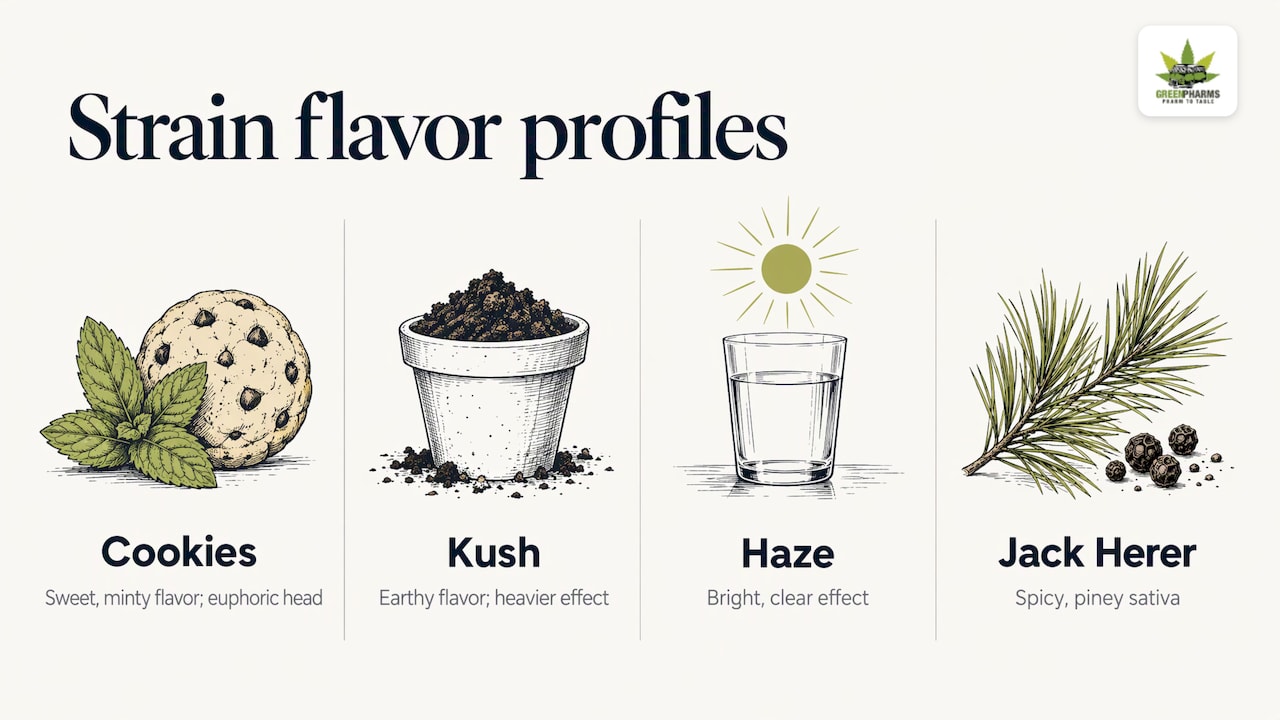
Tolerance builds, so many regular consumers look for the 24 to 28% tier. Within it, choose by flavor and effect. A Cookies cross tends toward sweet and minty with a euphoric head. A Kush leans earthy and heavier. A Haze leans bright and clear. If you like a spicy, piney sativa, Jack Herer is a long-standing name, and Pineapple Express and Strawberry Diesel offer fruit-forward alternatives.
If you use cannabis for medical reasons
Many of our customers use cannabis as an alternative therapy. Higher THC is not automatically better for symptom relief, and it can be more than you need. Work with your physician on the cannabinoid ratio and dose, and use the lowest amount that does the job.
Strong products beyond flower
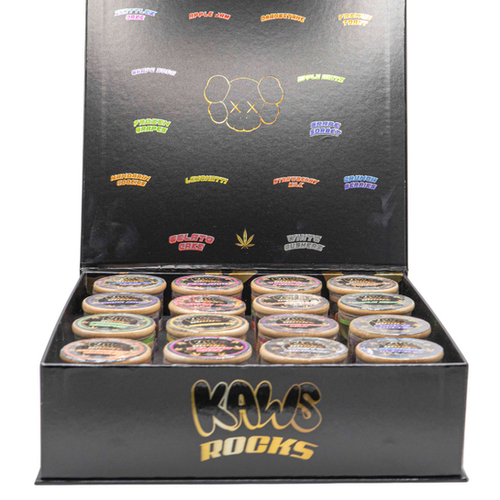
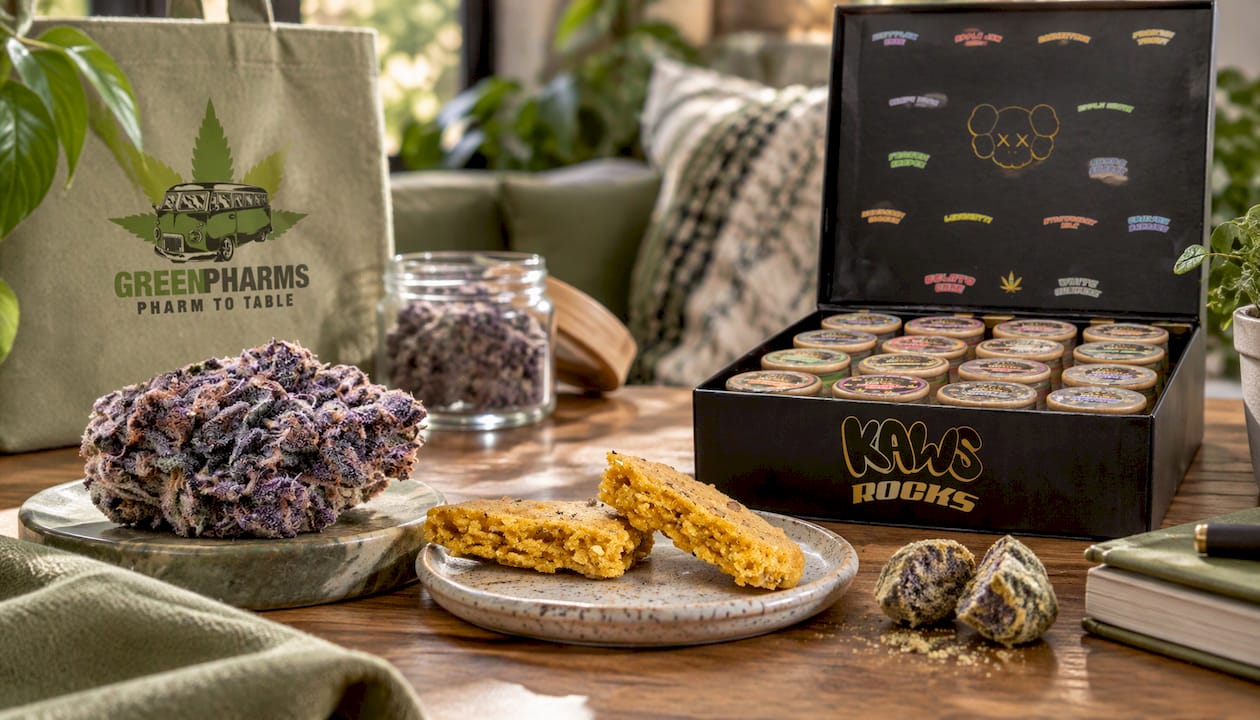
Potency varies sharply by format. Concentrates are far stronger than flower. Edibles deliver THC by the milligram and act more slowly. If you prefer to skip smoking, browse our edibles and pre-rolls. For something unusual, we also carry moonrocks, such as Kaws Moonrocks, and snowballs. For a first order, Maryland’s guide suggests inexperienced consumers avoid concentrates and start edibles at 2.5 to 5 mg THC.
Using high-potency cannabis safely
High-THC products raise the chance of adverse reactions, so pace matters more than the percentage.
- Inhaled: effects can start within 1 to 10 minutes. Take one inhalation, then wait 15 to 30 minutes before deciding on more.
- Edibles: onset can take 30 minutes to 2 hours. Start with a low dose and wait the full window. Maryland advises waiting two hours before taking more.
- Don’t mix cannabis with alcohol or other substances, and don’t drive impaired.
- Store it locked and out of reach of children and pets.
Research on regular high-potency use points the same way. A 2025 American Journal of Psychiatry review of 42 studies found evidence suggestive of a link between higher-potency use and problem cannabis use, though overall certainty was very low. A 2022 Lancet Psychiatry review of 119,581 participants associated higher-potency use with increased risk of psychosis and cannabis use disorder. The practical takeaway is to choose the strength that fits you and keep your frequency in check.
Where to find potent strains in Michigan
Michigan’s flower is among the cheapest in the country: Budpedia’s regulator-sourced index puts the state at $2.12 per gram in September 2026, the lowest of six tracked states. That price is a market average, and it moves with each regulator release. It does not tell you the quality of a given jar, which is why strain, batch and lab data matter.
Green Pharma Bay City is a Michigan-based provider with an online catalog covering flower, edibles, pre-rolls, concentrates, moonrocks and snowballs, serving medical and recreational customers. Our knowledgeable staff give personalized product recommendations and educational support, so whether you want the top of the potency range or a gentler first step, you can choose with confidence. Browse our cannabis flower, or start from our homepage.
If you want a specific flavor profile, a fruit-forward cross like Black Cherry Pie or the earthy Vanilla Kush is a good place to start.
FAQ
What is the strongest cannabis strain?
It depends on the dataset. In public state lab tests, GMO Cookies has the highest median at 26.74% THC, followed by Blue Cheese and LA Kush Cake. Strain guides cite Memory Loss at 26 to 31%. Individual batches of many strains can exceed their median.
Does higher THC mean a better high?
Not necessarily. Effects depend on the individual, the product’s potency and how it is consumed. Terpenes, tolerance and dose all shape the experience, so a 22% flower can suit you better than a 28% one.
How accurate are THC percentages on labels?
They are good estimates, not exact measurements. A Colorado study of 277 products found observed THC was significantly lower than label THC on average for both flower and concentrates. Reading the batch COA gives you the most detail.
How much should a beginner take of a high-THC product?
Beginners should choose a lower-THC product first. For inhaled products, one inhalation and a 15 to 30 minute wait is the standard guidance. For edibles, 2.5 to 5 mg and a two-hour wait is the Maryland recommendation.
Sources
- Strain Lab Report: 57 Strains, 30,074 Tests Compared
- The lab map, AmIBaked
- Weed Market: Cannabis Prices by State and Strain (2026)
- Highest THC Strains: 17 Options, Healthline
- Cannabis Strains Directory, This Is Why I’m High
- Cannabis Testing Guidelines and How to Read a Certificate of Analysis, New Jersey
- Accuracy of labeled THC potency across flower and concentrates, Scientific Reports
- The Cannabinoid Content of Legal Cannabis in Washington State
- Guide to Safer Cannabis Use in Minnesota
- High-Potency Cannabis Use and Health: A Systematic Review, American Journal of Psychiatry
- Cannabis potency review, Lancet Psychiatry (University of Bath)
- What you need to know to BeCannabisSmart, Maryland
- Medicinal and Adult Use Cannabis Regulations, California DCC
- How to read your weed label and how it gets tested in Michigan, Outlier Media