
Blog
Cannabis for PTSD: What Research Shows and How to Choose


Many people with post-traumatic stress disorder (PTSD) look at cannabis for sleep, nightmares, hyperarousal and the constant sense of being on guard. If you are one of them, the most useful things to know are what researchers have actually tested, which choices (THC, CBD, format, dose) change the experience, and which safety points matter most. At Green Pharma Bay City, our staff walk Michigan customers through flower, edibles, pre-rolls and concentrates and give tailored recommendations and educational support, so you pick a product knowing what it is and how to use it.
This guide is for adults who are considering cannabis, whether you hold a medical card or buy recreationally. It is not medical advice. Your prescriber or mental health clinician should know about any cannabis use.
TL;DR
- Research on cannabis and PTSD is still developing. The September 2026 Cannabis Evidence update lists 10 ongoing randomized trials, so the picture will keep changing.
- Studies have focused on overall symptoms, nightmares, sleep, mood and fear responses. THC, CBD and combined products have each been tested, in very different doses and formats.
- Potency is the biggest practical variable. Concentrates can contain up to 90% THC, so start low and go slowly.
- Tell your doctor before you start. THC and CBD can interact with some prescription medicines, and cannabis should not be mixed with alcohol or benzodiazepines.
- Our team can help you choose a format and potency that matches your experience level.
Table of Contents
- What researchers have studied
- THC, CBD and both together
- Choosing a format
- A safer way to start
- Safety points that matter with PTSD
- Talking to your clinician
- Where our team helps
- What comes next in the research
- FAQ
- Sources
What researchers have studied
PTSD is not one symptom. It is a cluster: intrusive memories and nightmares, avoidance, mood changes, and being constantly keyed up. Studies of cannabis tend to pick one or two of these and measure them.
According to a 2026 scoping review of 26 studies covering 3,598 patients, researchers have looked at overall symptom severity, nightmares, sleep quality, functioning, depression, anxiety and the brain biology of fear extinction. Fear extinction is the process by which the brain learns that a once-threatening cue is now safe, and it is central to how trauma therapy works.
A few findings from that review show how varied the work is:
| What was tested | Dose and format | What the researchers observed |
|---|---|---|
| Nabilone (a synthetic form of THC) | Taken by mouth | The only randomized trial result with a clear benefit over placebo, for nightmares |
| Acute oral THC | 7.5 to 10 mg | Changed brain activity linked to fear extinction, without a change in symptoms |
| Oral CBD | 300 mg | Short-lived changes in mood and thinking during trauma recall |
| Smoked cannabis (high THC, high CBD, or both) | Three weeks | No difference from placebo on overall symptoms in the largest trial |
The nightmare result is worth a closer look. In the September 2026 update, a small crossover trial of 10 people reported a bigger drop in distressing dreams with nabilone than with placebo. The authors rate the certainty as very low because the trial was so small. It is a lead worth following, not a settled answer.
The largest smoked-cannabis trial, run with 80 U.S. veterans, is described by the National Center for PTSD. It compared high-THC, high-CBD and balanced THC+CBD cannabis with placebo over three weeks. The second phase, which had no placebo, saw symptom reduction only in the THC+CBD group. Without a placebo group, that result shows a direction to study further.
The key takeaway is that most clinical trials use a standardized, lab-made preparation at a fixed dose. A product you buy in a shop varies in composition. The Drug Free America Foundation notes that results from approved cannabinoid medication trials cannot simply be carried over to dispensary products. That is exactly why knowing your product’s cannabinoid profile matters.
THC, CBD and both together
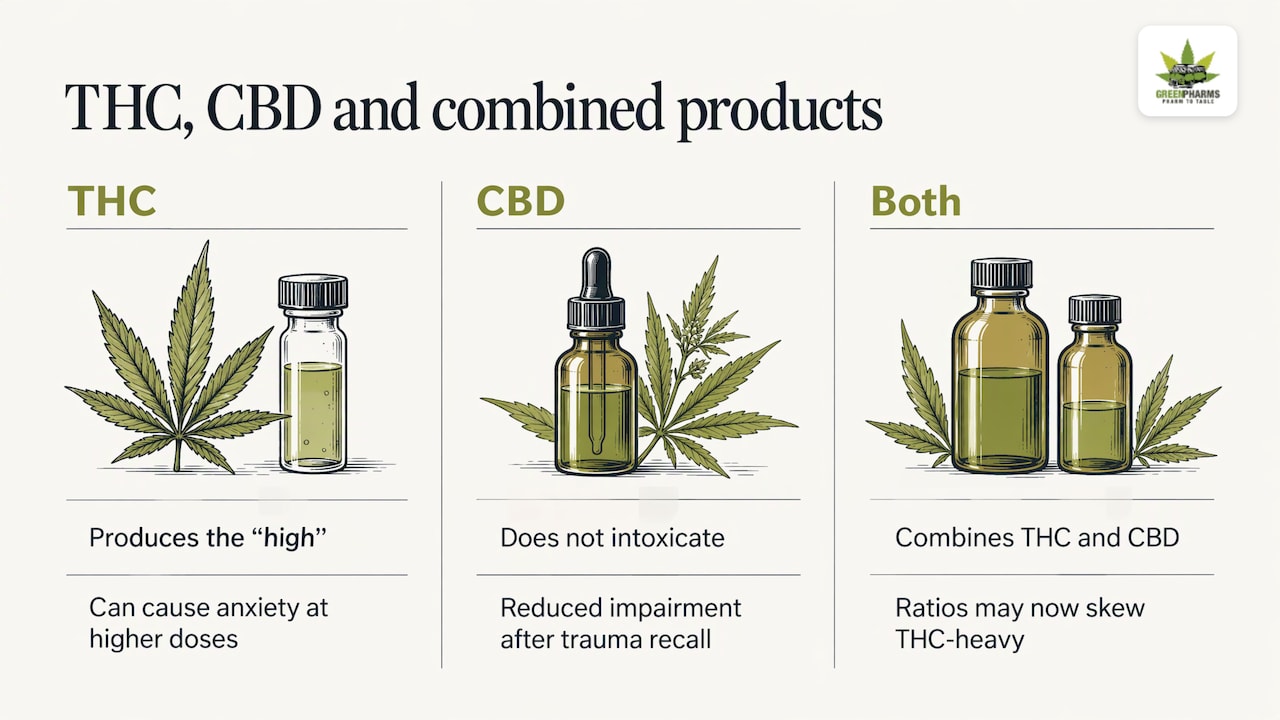
THC is the compound that produces the “high.” CBD does not intoxicate. Most product labels list both as percentages or milligrams, and the ratio shapes how a product feels.
THC. In the lab, a single oral dose of THC altered how the brain handles fear cues. At higher doses and in people who are anxious, THC can also bring on dizziness, anxiety or a racing heart, which is why a gentle start matters for anyone whose nervous system already runs hot.
CBD. A June 2025 review reported that CBD reduced cognitive impairment scores in participants with PTSD after they recalled a traumatic event. It found no difference from placebo on alertness, anxiety or physiological measures. CBD is often chosen by people who want a milder, clearer experience.
Both. Balanced products combine the two. The National Center for PTSD points out that the average THC-to-CBD ratio in products has climbed substantially over the past decade, so a product that was once balanced may now be much more THC-heavy. Read the label rather than assuming.
When you shop with us, the staff can read a label with you, explain the THC and CBD figures, and recommend a profile that fits your experience level and your goals. That kind of guidance matters most when you are new or returning after a break.
Choosing a format
How you take cannabis changes how fast it works, how long it lasts and how easy it is to control the dose.
Flower and pre-rolls. Smoking or vaporizing flower is the most familiar route. A pre-roll is a ready-rolled joint, which gives you a consistent amount each time and removes the guesswork of grinding and rolling. Smoking does carry respiratory effects, which the VA/DoD guideline summary lists among the side effects of smoked cannabis, so some people prefer other formats. Browse our pre-rolls if you want a simple, measured option.
Edibles. Edibles are predictable in dose because each piece is labeled in milligrams. They take longer to take effect, and the main error is taking more while waiting. Dose-stacking, meaning repeating a dose before the first has peaked, is one of the habits UpToDate’s guidance tells people to avoid. Our edibles range includes items such as the Chocolate Chip Cookie Bite, with the dose stated on the product page.
Concentrates and vape cartridges. These are the most potent formats. The National Center for PTSD notes that waxes, tinctures and oils can contain up to 90% THC, so a person can take a very high dose in one go without realizing it. For anyone new, or anyone managing PTSD-related anxiety, these are formats to approach with particular care, and our team can talk you through potency before you order.
Strain choices. Many shoppers ask about named strains. Classic indica-leaning options such as OG Kush and Vanilla Kush are popular for evening use, while Jack Herer is known as a sativa-leaning daytime choice. Strain names are a starting point, not a guarantee. Chemical makeup varies from batch to batch, so use the THC and CBD figures on each product page as your real guide.
A safer way to start
Harm-reduction guidance from clinicians is consistent, and it is practical enough to follow at home. UpToDate’s adult cannabis guidance recommends:
- Start at a low dose. Increase slowly, no more often than every two to three days.
- Avoid unintentionally high THC doses. That means not stacking edibles and being careful with dabs and waxes.
- Do not mix cannabis with alcohol or benzodiazepines. Both add sedation and impair judgment.
- Never drive under the influence.
- Pick the route to suit the goal. For people new to cannabis, it suggests sublingual tinctures for short-term symptoms and ingested products for symptoms that persist through the day.
Write down what you took, how much and how you felt. A short log makes it far easier to adjust, and it gives your clinician something concrete to discuss.
Safety points that matter with PTSD
Several risks are well documented, and they are worth knowing before the first purchase.
Dependence. A JAMA review reported that 29% of people using cannabis for medical purposes met criteria for cannabis use disorder. Signs include needing more to get the same effect, trouble cutting back, and using to avoid feeling bad when you stop. A systematic review of 14 studies found that all three studies of people with both PTSD and cannabis use disorder reported a risk of worsening symptoms, including suicidal thoughts and violent behavior. If you have ever had trouble controlling your use, say so to your clinician before you start.
Potency. The same JAMA review linked high-potency cannabis to higher rates of psychotic symptoms (12.4% versus 7.1%) and generalized anxiety disorder (19.1% versus 11.6%). The American College of Physicians adds that large amounts of THC can cause acute psychosis, and that long-term use of high-potency cannabis, especially when started young, is associated with more psychotic disorders, particularly with a genetic predisposition. If psychosis or schizophrenia runs in your family, raise that with your doctor first.
Common side effects. A 2021 systematic review found dry mouth, headaches and psychoactive effects such as agitation and euphoria reported most often.
Who should be especially careful. JAMA’s review lists pregnancy, schizophrenia and ischemic heart disease as conditions to screen for before considering any cannabinoid. Adults only: cannabis is for people 21 and over in Michigan’s adult-use market, or registered patients under the state’s medical program.
Medication interactions. UpToDate notes that THC and CBD are processed by the same liver enzyme system (cytochrome P450) as many drugs. Medicines named include warfarin, phenobarbital, digoxin and certain antibiotics such as fluconazole, which means closer monitoring when you start or stop cannabis. A pharmacist or prescriber can check your own list in minutes.
Talking to your clinician
Cannabis should sit alongside your care plan, not replace it. The National Center for PTSD advises providers not to ignore cannabis use in patients with PTSD, and to offer education about long-term use. JAMA’s review likewise encourages informed benefit-risk conversations rather than avoidance.
A short checklist makes that visit useful:
- Bring your list. Every prescription, supplement and over-the-counter medicine you take.
- Name your goal. Sleep, nightmares, daytime tension, or something else. A specific goal makes it easier to judge whether a product is helping.
- Share the product details. Format, THC and CBD amounts, and how often you use it.
- Ask before changing anything. Do not stop or reduce a prescribed medicine or therapy on your own. Trauma-focused therapy and prescribed medication are part of established PTSD care, and your clinician can tell you how cannabis fits around them.
Rules differ by state. Utah, for example, permits medical cannabis for PTSD when a qualified provider confirms the diagnosis and the patient is also in treatment with a licensed mental health therapist. Michigan has its own medical program and rules, so check the state’s official requirements for your card.
Where our team helps
Choosing among flower, edibles, pre-rolls, concentrates and vape cartridges is easier with someone who knows the range. Green Pharma Bay City serves customers across Michigan, medical and recreational, new and experienced. Our knowledgeable staff give personalized product recommendations and educational support, and our customers tell us that service and reliability are what they value most.
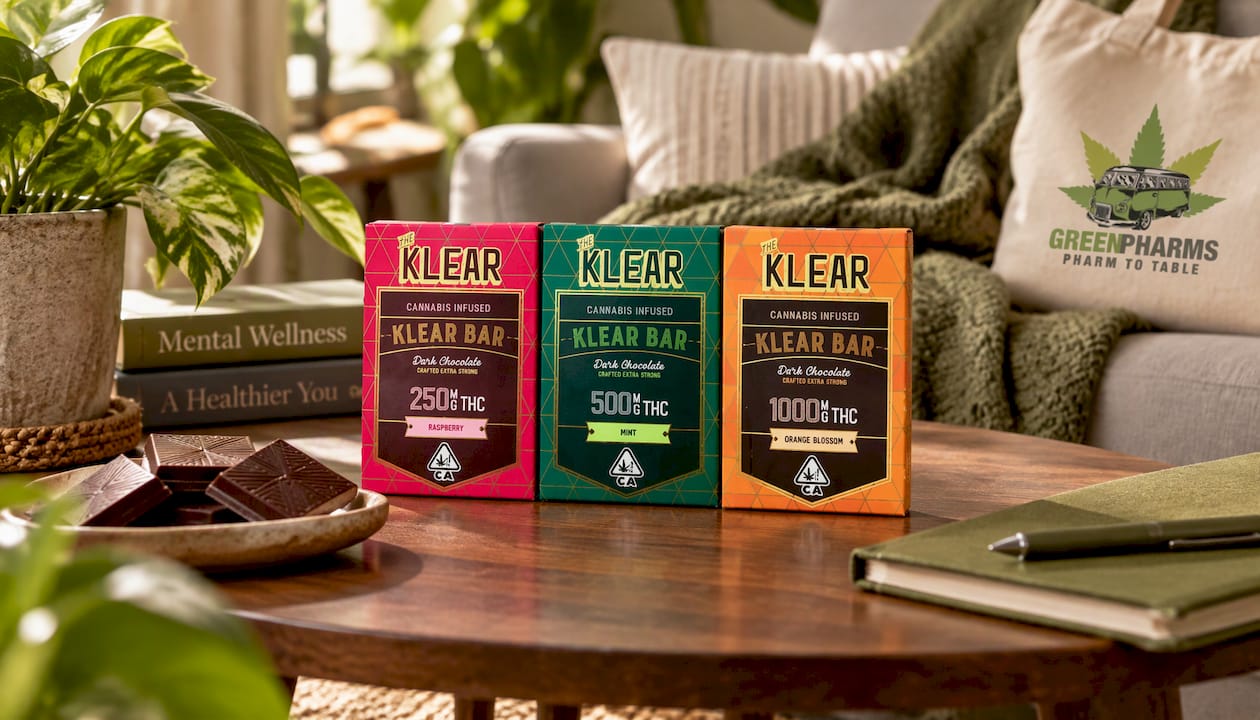
If you want a controlled, labeled dose, start with our edibles or pre-rolls. If you want to compare choices or ask about a THC and CBD profile first, you can start from the Green Pharma Bay City store and ask our team.
What comes next in the research
The field is moving. The September 2026 update reviewed 8 studies, three randomized trials and five large cohort studies of 136 to 2,276 people, most from veteran populations. It also counted 10 ongoing randomized trials, and the FDA has approved a trial of cannabis for PTSD in veterans. Better-designed studies with standardized products should clarify which patients, which compounds and which doses matter. Until then, careful use, clear records and an open line with your clinician are the strongest tools you have.

FAQ
Can I use medical cannabis for PTSD in Michigan?
PTSD is among the conditions listed for Michigan’s medical program, and the state sets its own registration steps. Check the official state program for current requirements, and talk to your clinician about whether certification makes sense for you. Adults 21 and over can also shop in the adult-use market.
Is CBD or THC better for PTSD?
Researchers have tested both, and neither has a settled answer. THC changes fear-related brain activity at the doses studied, while CBD showed short-lived effects on mood and thinking during trauma recall. Many people look for a balanced profile, and our staff can explain how different THC-to-CBD ratios tend to feel.
What is the safest way to start?
Begin with a low dose and raise it slowly, no more often than every two to three days. Avoid stacking edibles, steer clear of very high-potency concentrates at first, and never combine cannabis with alcohol or benzodiazepines. Do not drive after use.
Can cannabis interact with my medications?
Yes. THC and CBD use the same liver enzymes as warfarin, phenobarbital, digoxin and some antibiotics, so your prescriber may want closer monitoring. Share your full medication list with your doctor or pharmacist before you start.
Sources
- Cannabis for the Management of Symptoms of PTSD, September 2026 update
- Efficacy, effectiveness and safety of medical cannabis in PTSD, scoping review
- Cannabis Use and PTSD Among Veterans, National Center for PTSD
- Cannabinoids for PTSD: Why the evidence still falls short
- Understanding the Role of Endocannabinoids in Posttraumatic Stress Disorder
- Medical use of cannabis and cannabinoids in adults, UpToDate
- Therapeutic Use of Cannabis and Cannabinoids, JAMA
- A Systematic Review of the Clinical Effects of Cannabis and Cannabinoids in PTSD
- Cannabis or Cannabinoids for the Management of Chronic Pain, Annals of Internal Medicine
- Cannabis in the management of PTSD: a systematic review
- Utah Cannabis Research Review Board brief evidence report